
Hello dearest writers!
Can you believe March is almost over?! Did we all meet our writing goals for the month? Or did some of us spend more time procrastinating in various ways (yes, we also sometimes fall into the trap of buying pens and notebooks and doing ‘research’ to avoid getting those words down 😅).
Today we share various articles, including one from Leah Paulos about book promotion, one from Brianne Sommerville about finding a PR hook, and one from our very own CeCe Lyra, where she compares querying to dating. Carly and CeCe answer your burning questions from this month, and we also highlight Thursday’s episode, plus our March bonus episode.
Don’t forget, we’ve launched a TSNOTYAW Membership Program so you can get even more The Shit No One Tells You About Writing goodness! Our podcast episodes and Friday newsletter issues will continue to go out free of charge (we *love* sharing all this amazing content with writers like you). But as TSNOTYAW has grown, so too have the many, many hours our team pours into it, and in order to be able to keep showing up for you guys, we decided to launch this exciting new venture.
For just USD$8 a month or USD$80 a year, you can receive our paid newsletter on Tuesdays which features weekly bonus author Q&As, exclusive content from industry experts, weekly access to Carly Watters and CeCe Lyra’s written notes on queries from the podcast’s Books With Hooks feature, monthly bonus podcast episodes, AND regular Ask Me Anythings / Q&As with Carly, CeCe, and Bianca. Whew, that’s a lot!
In the meantime, we’ve got some great content today that will fill you with literary inspiration and motivation! 🌟😍
❤️ The Shit No One Tells You About Writing Team
The 9 Most Important Words in Book Promotion
By: Leah Paulos
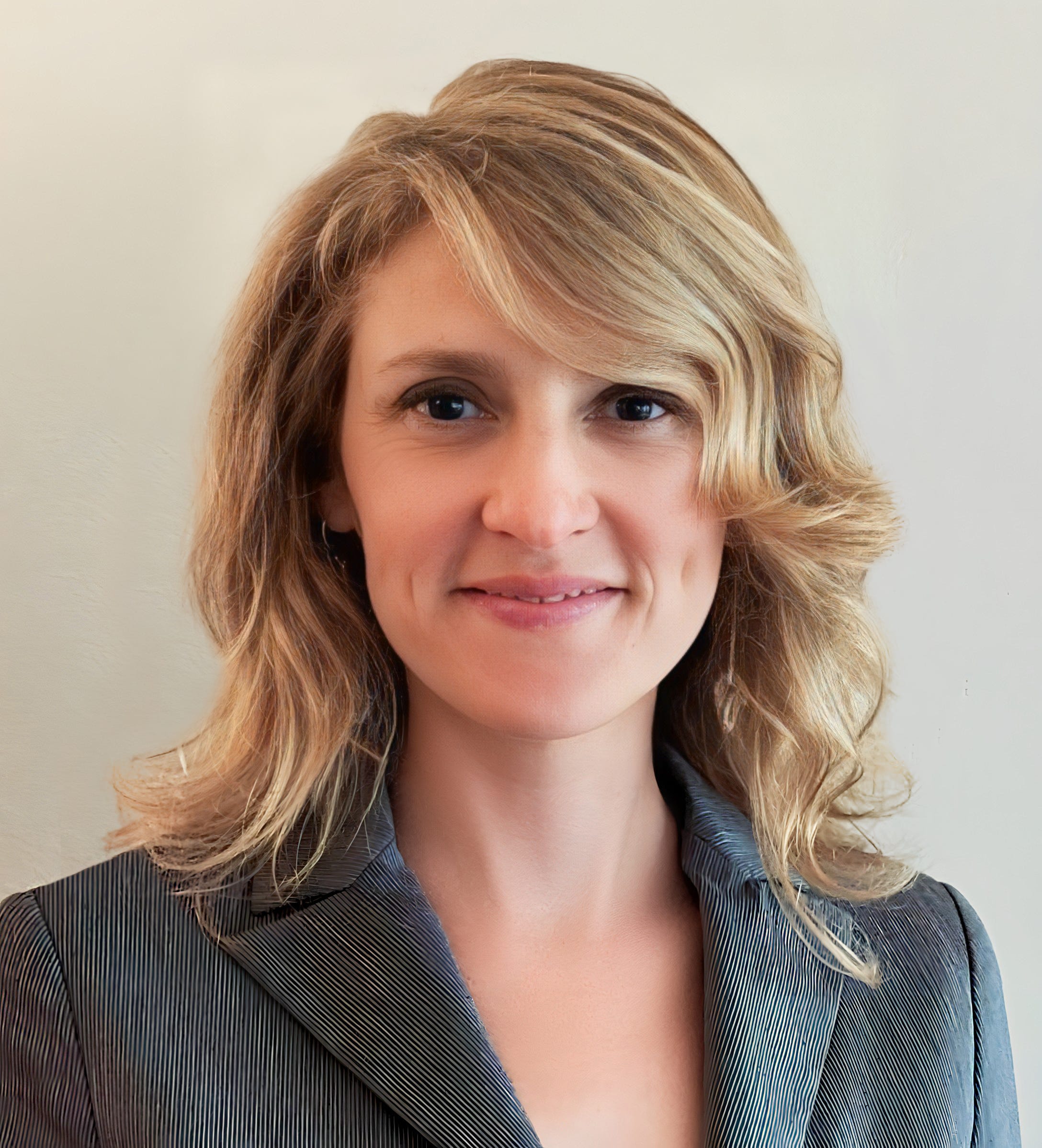
Leah Paulos is the Founder and Director of Publicity at Press Shop PR—where she’s led media campaigns for over 300 books, including multiple #1 NYT bestsellers—and Book Publicity School, where she leads workshops and coaching programs for authors.
There are many ways to promote your book—offering an event to a local bookstore, pitching journalists, submitting for festivals—but most of them have one thing in common: they require getting a busy person with a crowded inbox to open an email from someone they don’t know. And no one opens a random email with a boring subject line. “New novel by debut author” or “memoir about life’s difficulties” — not going to cut it.
You may have written a masterpiece of an email (and of a book), and you may be sending it to just the right person, but if the subject line isn’t effective, your perfectly crafted email will get archived or buried beneath hundreds of others. That’s why your subject line is composed of the 9 — or 5, 7, or 10—most impactful words you will write when promoting your book.
An eye-catching subject line must be four things: concise, specific, compelling, and timely.
Concise: Busy people scroll through emails quickly and ruthlessly. Subject lines must be short, and the first 3-4 words need to do a lot of heavy lifting—that’s often all that will show up when someone checks email on their phone.
Get specific: What’s unique about your book? “Essays about abortion” doesn’t give as much information as “the leaders of today’s pro-choice movement—new essays.” “New memoir on overcoming poverty” isn’t as substantial as “Amazon exec on growing up homeless—new memoir”
Compelling: I hate to speak well of “clickbait” but, at its core, clickbait is a short bit of text that impels you to click. Bingo! Try to pique the inbox owner’s curiosity while remaining true to your book and sensibility. How does your book push the envelope? Is there something counterintuitive you can spotlight?
Timely: It doesn’t have to be about this week’s breaking news, but it should feel current or show people why they need to read your book now. What feels fresh or relevant? Noting that social media is ruining our attention spans, for example, might have been a novel observation 8 years ago, but today it’s the baseline narrative from which you need to build.
As with all things book publicity, you need to spell out why people should care. When pitching a journalist or event coordinator, you aren't sending the email to someone who will be moved solely by the fact that you wrote a book. They aren’t invested in your work’s success — they are invested in getting and keeping their audience’s attention. Your subject line must allude to something that your e-recipient is likely to consider important or original.
Fortunately, in 2024, everyone—including you—is an expert evaluator of email subject lines. You archive or ignore unimportant emails every single day. So, how can you harness those skills to help with your book promotion?
In every one of our classes at Book Publicity School, we suggest authors test subject lines on themselves. The key is to get fresh eyes on it. Write up a few and use the “send later” function to schedule emails to hit your inbox a day or two later. When they “unexpectedly” pop up amidst all the other emails that come your way, you will know immediately whether you got it right. Make sure to check out the email on both your computer and your phone. What gets cut off? Will it still make you click?
To get you started, here are a couple of subject lines we used at Press Shop PR to land major media spots:
the power of subtraction in a culture of more—new book by Bob T. Author
young love, colliding cultures, and a search for belonging in Seoul—debut novel from Korean-American writer Bob T. Author
everything you think you know about single people is wrong—new book, TITLE by Bob T. Author
These are tough times for authors to be angling for attention, and we have seen opportunities slip away when news of a great book is hidden behind a bad subject line. Many people think of them as just a couple extra words to bang out before hitting send. I would instead encourage you to consider them a vital bit of writing necessary to reach the people who can champion your book.

Are you looking for beta readers, some of whom might potentially become writing group members down the line?
Are you wanting to be matched up with those writing in a similar genre and time zone, so they can critique your work as you critique theirs at the same time?
Your manuscript doesn't have to be complete to sign up!
This particular match up will be open to registrations from now until the 31st of March, with the match up emails going out on the 1st of April.
For more information and to register, click below:
March Q&A with Carly, and CeCe 🌟🧐
This month we’ve switched it up and given you our Q&A in written form! We’ll be back to videos next month, but let us know what your favourite format is 😍 We always love to hear from you about what floats your boat (yes, that’s a cliche, and yes, that’s a writing rule we intentionally broke 😉).
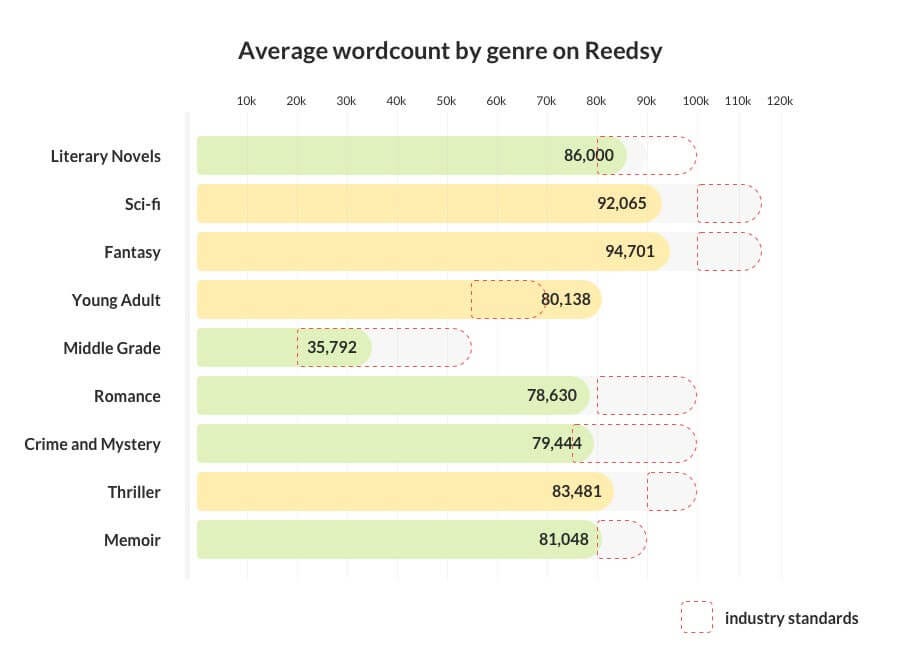
I have a novel that is 35,000 words long that I'm having a lot of trouble placing. One strategy that I found out could possibly work is pairing it with something else to make it a full-length project. And I do actually have another novella that's about 20,000 words long that is similarly themed, that I think could pair well. So my question is how to pitch them together, how to structure the query letter, and also for my pages, would I include samples from both pieces or just from one? Thank you so much in advance.
Carly: This is short! Is it for kids? If it’s for adults then it’s a complicated question because this sounds incomplete. You’re asking if two projects can be put together? But only if it’s all one story… agents want to be pitched a complete novel, a complete vision. This sounds like you haven’t quite figured out what the vision is yet.
Here’s a good resource about word count that should help:
Hi Carly, CeCe and Bianca, thank you for all that you do. I’d like to find out a little bit more about writers’ grants; how you apply for them, what sorts of things would be eligible to say, because with writing, I’d like to have some money to work on my book so I don’t have to also have a full time job, which isn’t as specific as something like putting on an art exhibition. So yeah just tips about how you can go about applying for a grant for writing a novel or memoir. Thank you!
CeCe: Okay. I love this question because you're talking about something that every writer wants, right? Like you want something that every creator deserves, which is time and space. And yeah, you want to be funded. You want to be funded for that. Grants are essentially how things get done in that space. So, a grant is when another person, it could be a public body, it could be a private individual, it could be an organization, pays you money to work on your creation, which sounds awesome, right? And because it sounds so awesome, they're super competitive. So that's something to keep in mind and they really depend on your situation. So where are you located in the world? What kind of book are you writing? Even personal things like your age, your identity. These things might influence whether or not you're eligible for certain grants. And I don't know your specific situation, so I can't point you exactly in the right direction, but I can mention a few places that would be a helpful starting point. So first, go to your local and that could be your state or your regional arts council, right? Like your arts council is always a great place to start. You could also check out NYFA source. So the address for that is source.nyfa.org. They have a list of grants. Maybe you're eligible for one of these. Also check out Poets and Writers magazine and also their website. They have awesome information on grants. And honestly, I know this will sound a little basic, but it works. Google, like Google your own situation and make sure to use keywords that apply to you. So don't Google grants for writers. You might want to try grants for Latina writers under 30, if that's, of course, your situation. Another awesome resource for all things in life, librarians. They are the producers of the book world. So I would check out your local library and chat with your librarian, be like, “hey, I'm looking for a grant. Would I be eligible for a grant?” And good luck, because that sounds really cool that you're looking into that.
Hi, I've got a couple of questions. I have a Publishers Marketplace subscription. And I've been coming across some terms I don't necessarily understand. Things like preempt, auction, also two-book deal. Does that mean the writer needs to have two books completed? Just a few things I'm trying to get a sense of in the industry. Thanks.
Carly: Let’s go through the definitions! Pre-empt: a publisher makes an early offer that’s supposed to be very enticing so that the author doesn’t want to entertain anything else. The publisher should hope that it's enough and doesn’t go to auction. Auction: a bidding war. Every agent conducts these differently so I can’t explain exactly how it’s done. Two book deal: publisher bought two books at once. They do not need both books to be written but they usually have a good idea of what the second one is and the author has provided a detailed synopsis.
Hello! As a Canadian writer should I use Canadian or American spelling if I’m planning on querying both American and Canadian agents? Thank you!
CeCe: I love that some of these questions are so easy and straightforward to answer. So you can use either. Just be consistent, right? So if you pick American, stay consistently in the American spelling. If you pick Canadian, stay consistently in the Canadian. If you have a preference, one that would make you feel more comfortable, go with your preference, right? I will say that if it's all the same to you, use American spelling only because there are more people who use American spelling, so it's just, it just feels more efficient, but really, as long as you're consistent, it's up to you.
Hi, Bianca, Carly and CeCe. Thank you so much for everything you do on the podcast. I'm obsessed. I have two quick questions. My first question is, is the hesitation over debut authors' novels being part of a series dependent on genre? I'm thinking in particular the fantasy genre, where it seems like every book is meant to be part of a series. So would that not be as much of a concern there when querying? My second question has to do with POV. If you are writing a book that is multi-POV, as in it alternates between multiple characters' perspectives, rather than the first person and third person, for example, is it important to specify which type of POV you're talking about? Or if you're talking about both in your query letter, thank you.
Carly: Yes, fantasy planned series are good. But the first book has to sell and be very strong. Regarding POV: Multi POV is assumed to be multiple persons not 1st vs 3rd so you’re good!
Hi, I’ve got a request that might help listeners with finding their comp titles. Your February Q&A had a great segment debating the genres of a couple of published books and I was wondering if you could talk about genre with the author of every interview you do. So we listen to you talking about a certain book, we know where it falls on the spectrum and what other genres it could fall under as well. As always, thanks for everything.
CeCe: This is so interesting. I love the suggestion. First of all, thank you! A while back we had someone suggest that we state the word count of query letters, when we do books with hooks and we incorporated that and it works really well, so we are so appreciative of our listeners who offer these amazing interactive ideas, so thank you. I am laughing also because I'm remembering an interview I did with an author for the podcast that I asked what genre she wrote in, cause I wasn't sure. And she laughed and she was like, “I have no idea what genre I write in. My agent and my editor decide that.” So I'm curious to see how often that's going to happen. Not because you shouldn't know your genre as writers. You should, you should. But honestly, because it's so subjective and confusing, I'm wondering how often this is going to happen. And I'm looking forward to this question. Thank you so much for bringing it up and we'll definitely incorporate that.
Hello, this is Abby calling. I have a question about open submission periods for publishing houses. For example, Berkeley has an open submission period for un-agented writers, where they say that if they pursue your manuscript, you’ll have time to seek out an agent prior to any negotiation. How does that work as far as querying an agent if you were to get an offer from a publishing house during an open submission period? Thanks so much.
Carly: Personally, I think it makes things pretty complicated. If you get an offer from Berkley then go back and let all the agents who are reading know! And they can battle over you. But, you’re making it hard for the agent because are they are going to want you to turn down the offer so that they can shop it widely? This is very complicated and I’m a huge fan of open calls for transparency but they don’t always set everyone up for the best possible outcome.
Hi, I have a question about genre. I’m writing a dual timeline novel that’s split between the 1990s and 2010s. The story is heavily set in the 90s rock music industry. I’m not using Daisy Jones and the 6 as a comp bc it’s so big, but it’s certainly the best comp from a plot standpoint. I have a female protagonist that fights industry sexism to become a famous guitarist and a B story romance that is sometimes more compelling than the A story. The genre is probably historical division and romance, but the romance doesn’t have a happy ending, so I’m worried about the expectations around that category. I’d love to hear your take. Thank you.
CeCe: I mean, first of all, excuse me, but that sounds amazing. I want to read that. I love, love that pitch. Okay. Genre, once again, what genre is it? I'm almost wondering if it's women's fiction because you mentioned that the romance storyline is the B plot, right? So it can't be romance then in my opinion. So yeah, women's fiction, I think, but here's the thing, without seeing your pages, it's really hard to gauge. Like I have been in situations where I've been pitched. This is a thriller. I read the novel, not a thriller. Still loved it, but not a thriller. So it's really hard to know. My best guess would be women's fiction, but honestly, it sounds super compelling and amazing and based on the premise, I'd read it in a heartbeat.
Thank you everyone. See you next month! 🌟😍
Finding your PR hook
By: Brianne Sommerville
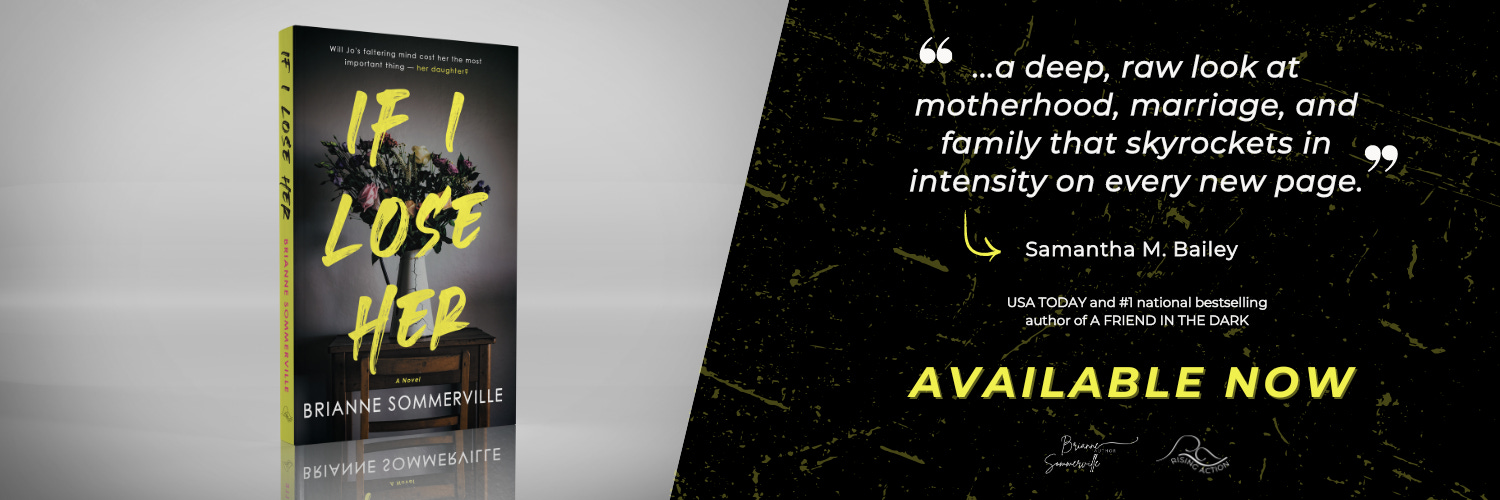
Brianne Sommerville writes news releases by day and fiction by night. A seasoned communications professional, Brianne has executed campaigns for numerous brands within the entertainment and fin-tech industries to consumer-packaged goods. She recently published her debut novel If I Lose Her with women-owned-and-run Rising Action Publishing Collective and used her thirteen-year public relations/marketing experience to help spread the word. Today, she offers tips and tricks for authors on how to find their PR hook and build a communications plan that won’t break the bank.
Sorry, but there’s another hook…
Congrats on nailing your book hook! It’s no easy feat but before you crack open that beer, pop that champagne or steep your tea, there’s another hook you’ll want to nail prior to your book release. To help identify your PR hook, start by asking yourself what about you and your book will appeal to media? Why are you the one to tell this story? What makes your novel or writing process unique? To help illustrate, let’s take my novel as an example.
If I Lose Her follows a first-time mom who is struggling to adapt to motherhood. When a near-fatal mistake places Joanna Baker under the watchful eye of Child Protective Services, she is diagnosed with postpartum depression. As she fights to keep her daughter, she discovers cracks in her neighborhood family and her own home. She must discover the truth to save what’s most important—her daughter.
So, why should the media care about this domestic suspense novel? Why would they want to speak to me?
If I Lose Her was inspired by my own experience with postpartum anxiety. I used my writing as a way to capture my fears and anxieties that I was too afraid to speak about with my friends, family and doctor. I penned the novel over two maternity leaves during naptime and sleepless nights after nursing my daughter. With this novel, I hope women who have experienced postpartum mental health issues will connect with the main character and feel seen. Of course, as a thriller writer, I also hope that readers will turn the pages into the night to get to the truth.
Was your novel inspired by something in your own life? Did you use your expertise in another industry to add authenticity to your story? Think about USA Today Bestselling author Hank Phillippi Ryan who was an investigative reporter before writing crime fiction. Or Mai Nguyen whose family’s nail salon inspired her debut Sunshine Nails.
Tap into your network
There are so many amazing literary media outlets to explore that it can often feel daunting. Start by looking at where you’ve discovered authors and your own TBR pile. Has your work been featured somewhere before? Return to those outlets or magazines to share news of your latest success.
I encourage you to also look outside of the book world as it relates to you and your work. For If I Lose Her, I connected with sites exploring motherhood, mental health, and women entrepreneurs. Oftentimes niche outlets will be receptive to hearing from an author as their outlet hasn’t interviewed them as often.
Contact your alma mater and local paper. You are publishing a novel! You are a hometown hero and often these local outlets will be thrilled to share your success with their community. Are you a former or current employee of a company that has a newsletter or intranet? Perhaps you belong to a club that shares its members’ news.
Make the journalist’s job easy
The sad truth is that newsrooms are stretched thin, so whatever you can do to make a reporter’s job easier will be appreciated. Here are a few things you can do to increase your chances of pick-up by an outlet:
Create a digital press kit that houses the details and materials for your release including your headshot and bio, the synopsis, and cover image. This can be as simple as adding files to a Google Drive and sharing that link with media to learn more, and it saves the reporter having to email to ask for these items.
Consider drafting a news release that includes that PR angle we discussed. Remember, media don’t love getting attachments, so it’s better to include this as text within the body of your email. I’ve seen local papers simply copy this and use it as their story when pressed for time. Check out this feature in my local paper, where the journalist used my news release and then supplemented it with a few of his own questions via email.
Consider creating a generic Q&A to outline how an interview with you could come to life. This could also be used by reporters to enrich their stories. You can add this to your digital press kit too!
Personalize your pitch to the reporter/outlet. We’ve heard how important this is when querying agents. Explain to the reporter why you’ve chosen to pitch them. Do they run a weekly column featuring local events and you’ll be doing a local book signing? Do they feature women writers with interesting backstories, and you believe you would be a good fit? This doesn’t have to be extensive—a sentence or two at the top of your pitch will suffice.
Know your strengths
Remember, you don’t have to do everything to get noticed. Does doing a TV hit terrify you? Do you find it hard to think of your answers on the spot? That’s totally fine! Perhaps, you would prefer to participate in an email interview where you can marinate on your answers or draft a guest post for a blog that you can write on your own time. Maybe radio or podcasts are more up your alley. PR doesn’t mean only one thing. You have the flexibility and opportunity to make it what you want.
Lastly, keep in mind that while most traditional forms of media are earned (meaning free), as the media landscape changes, you may find some outlets or bookstagrammers asking for a small participation fee. Know your budget going in and weigh each paid opportunity as it comes up.
Happy pitching!
This Week’s Podcast Episode✨🎙️✨

In today's Books with Hooks, Bianca, Carly, and CeCe discuss:
Keeping your author bio paragraph concise
The need for causality in a plot paragraph
Paying attention to the language you use in a query so you don't create confusion surrounding the book's premise
Knowing who your protagonist is and highlighting their interiority and inner life over other characters'
The stakes in rom-coms
Centering your protagonist's experience
Making plot details realistic so your readers are on board with them
Avoiding pages that seem crafted for the reader, and
The 'blank canvas protagonist' issue
After which, Carly interviews award-winning journalist and bestselling author, Jo Piazza.

They discuss:
Jo's upcoming novel, The Sicilian Inheritance
How she decided on a dual POV/dual timeline structure
Whether Jo is a plotter or a pantser, and how she approaches her first draft
Mirroring current themes in historical fiction
What a 'book club' book is
Weaving elements of personal life into her work
How Jo views herself as a creator
The idea of letting fiction lead the way
The process of film and TV adaptations, and
Jo's advice for emerging writers.
More information about Jo can be found here. She’s also on Instagram and Twitter.

You can get a copy of The Sicilian Inheritance on our Bookshop.org affiliate page here. Buying books through this link supports a local indie as well as The Shit No One Tells You About Writing 📚❤️
How Querying Can Feel Like Dating
By: CeCe Lyra

Anyone who has been in the querying trenches knows that it can feel grueling, competitive, and… complicated. As a literary agent, I often find myself resorting to analogies to make sense of this stage in a writer’s journey. At first, I resisted the often-used dating analogy: I worried it would sound creepy, drawing a parallel between romance and business. I had no interest in being creepy. But soon I realized that, for better or for worse (ha!), it’s a fitting comparison. Below are 6 ways in which querying can feel like dating.
You have to put yourself out there
Imagine talking to a friend who is vocal about wanting to find love, yet they never make the effort to meet people or go out on dates. Chances are this person isn’t going to match with a mate—not for lack of awesomeness, but for lack of trying. Love does not knock on doors, and neither do book deals. Writers must actively submit their works to agents if they ever hope to find one. I get it: exposure can be daunting, but it’s necessary. Being outspoken about wanting a career as an author is not enough (though, yes, that can be scary, too).
Kissing frogs is inevitable
“Nobody likes to be rejected” is a widely accepted sentiment. I think it’s only partly true, though. Nobody likes to be rejected as it’s happening. Talk to any happily married person and you’ll hear them express how, in retrospect, they’re grateful to the ones who turned them down because, while it hurt at the time, they wouldn’t have met their spouse if they had been stuck with the wrong person. This logic applies to querying, too. You will get rejected—it’s inevitable. But after landing your dream agent, you’ll be thankful to the ones who passed on the chance to work with you. In fact, one of my clients wrote about just that in her newsletter, This Debut Life. It’s true on the agent side, too: I’m grateful to the agents who rejected my clients so that they could find me.
You’re looking for The One, not just anyone
The adage No agent is better than a bad agent is popular for a reason: it’s true. The agent-client relationship is a partnership, and singledom is preferable to a dysfunctional (or even just lackluster) union. Think of all the harm that a bad mate can bring to one’s life. Yes, partnerships can be dissolved, but much like with romantic breakups, the dissolution process is seldom un-traumatic—and parting ways with someone doesn’t erase the past. The querying process is so competitive that often writers feel like getting an agent—any agent— is necessarily a lucky break. But a bad agent can damage your career. You wouldn’t advise a friend to get married to someone who didn’t make them feel valued and appreciated just to have a ring on their finger. The same logic applies to querying: do not settle.
Desperation is unattractive
Imagine you’re on a date and the first thing the person says to you is, “I’m really adaptable, so tell me what your dream partner is like, and I’ll become them!” Are they now more attractive to you? No, of course not. Their heart might be in the right place, but you’ve taken time out of your day to get to know who they are. You don’t want to hear that they’ll tailor their personality to suit you; you’re not looking for a robot. Most people understand this instantly and intuitively in the dating world: desperation is unattractive. And yet, literary agents often get queries that include a variation of, “If you don’t like something about this story, please know that I’d be happy to edit anything and everything,” or “Tell me what kind of story you’re looking for and I’ll write it.” I’m sorry to say that lines like these do not make the writer more attractive. I recognize the good intentions behind them: writers are hoping to demonstrate that they’re flexible, open to notes. (And that’s great because working with an agent is a collaborative process!) But don’t lead with it, especially not in such a desperate-sounding way. Having a clear vision for your story is attractive. Confidence is attractive.
Be confident, not arrogant
Lest my previous point be misunderstood, let me be clear: confidence is not arrogance. Just as you would not want to continue seeing someone who kicks off a first date with, “I am the best person you’ll ever date!” no agent wants to review a query that begins with, “This is the best book in all of bookland!” In my years as an agent, I have absolutely finished a manuscript only to think, “Holy moly, this is the best novel in the world!” But it was the pages that prompted me feel that way—not a promise in a query letter. Let your pages speak to your talent. It might not be fair, but it is human nature: hearing wildly positive statements about oneself (or one’s work) causes most humans to instantly doubt its veracity. (The same is not true of gushing about someone else’s work, which is why you should want your agent to be obsessed with your story.)
Your friends are a lifeline
What’s your first impulse after a particularly bad date? Chances are you want to vent to a friend. Having people in your life who know what it’s like to be single and looking—and who understand how frustrating it can be to try and fail—is invaluable. Similarly, cultivating a group of writer friends who understand the trials and tribulations of querying can be a lifeline. Water the friends who understand that your writing goals are important to you, and who will be there during the bad times with validation, encouragement, and chocolate. In the dating world, those friends will step up to celebrate your wedding day—and other romantic milestones. In the publishing world, they will make it to your acknowledgements. And hopefully you will make it to theirs, too.
What do you think of the parallels between querying and dating? I’m curious to hear your thoughts!
Our March Bonus Episode 🎉😍

In this month’s bonus episode, Bianca interviews game designer, curator, and writer, Holly Gramazio to discuss her debut novel, The Husbands.

The two chat about:
Holly's journey to publication
The novel’s inspiration and genre
How game design lends itself to novel writing
How she structured the novel
The importance of causality
Holly's approach to POV, and
Whether she feels pressure to write future novels in the same genre

You can find more info about Holly here. She’s also on Instagram and Twitter!
After which Emilie Sommer of East City Bookshop provides the invaluable service of suggesting comp titles to our listeners. 😍 You can connect with Emilie Sommer on Instagram. While you’re there, give find East City Bookshop a follow as well!
You can get a copy of The Husbands on our Bookshop.org affiliate page here. Buying books through this link supports a local indie as well as The Shit No One Tells You About Writing 📚❤️
And that’s it for now. We hope you have a fun weekend ahead of you. We’ll be back next week with more ✨
❤️ The Shit No One Tells You About Writing Team
Our work takes place on land now known as Toronto and Ottawa and we acknowledge that these are the traditional territories of the Mississaugas of the Credit, the Anishnabeg, the Chippewa, the Haudenosaunee, and the Wendat Peoples as well as the unceded, unsurrendered territory of the Anishinaabe Algonquin Nation. Toronto is covered under Treaty 13 and the Williams Treaties. We respect and affirm the inherent and Treaty Rights of all Indigenous Peoples across this land and acknowledge the historical oppression of lands, cultures, languages, and the original Peoples in what we now know as Canada. We invite you to learn more about the land you inhabit, the history of that land, and how to actively be part of a better future going forward together at Native Land or Whose Land
I find Querying absolutely daunting, not because of rejections per se. It's also like a Subjective Beauty Pageant.
It seems a lot of effort for something that may never happen-- regardless of the quality, theme, word count, title. Specially for a Latina debut author in her 70's. So much that I've been paralyzed at the event horizon looking down at the point of singularity of the black hole: the query letter.